Open Today Sales: 9 AM-7 PM
Lucas Chevrolet · South Jersey
Trailer ratings, tongue loads and payload for the properly equipped Colorado.
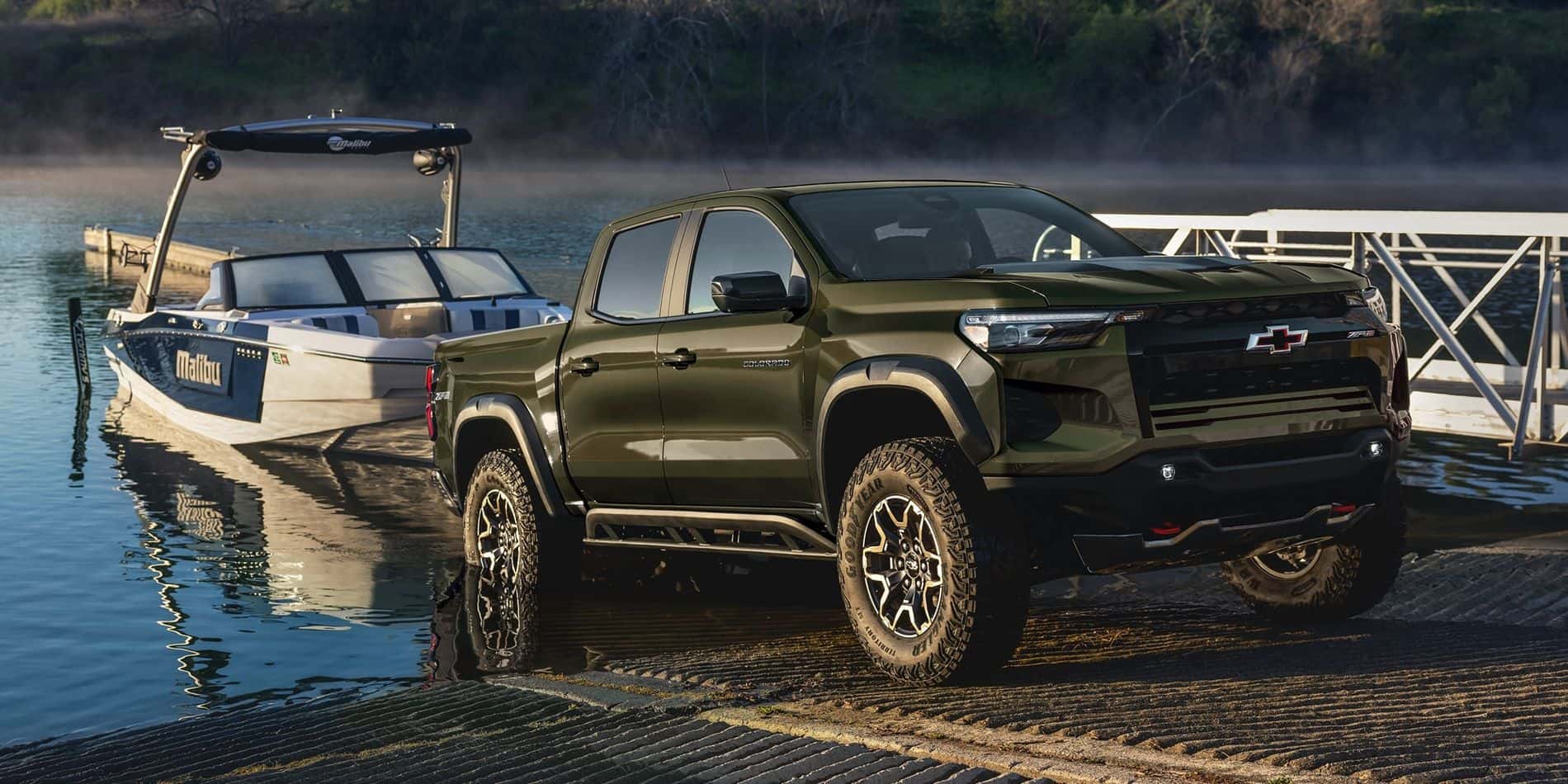
When properly equipped, the 2027 Chevrolet Colorado Crew Cab with the 2.7L TurboMax and Trailering Package, excluding ZR2 and Bison, has a maximum 7,700-lb conventional tow rating for South Jersey trailer duty.
The package, truck load and trailer load all matter to the combination. Lucas Chevrolet offers Colorado trucks with trailering equipment for owners combining weekday hauling with weekend trips. The capacity specifications and trim equipment connect those ratings with the rest of the truck.
| When properly equipped, the 2.7L Crew Cab with Trailering Package, excluding ZR2 and Bison, is rated for up to 7,700 lbs. |
| The properly equipped ZR2 rating is 6,000 lbs; ZR2 Bison is 5,500 lbs. |
| The package-rated 7,700-lb setup has a 13,250-pound GCWR and a 770-pound maximum tongue load. |
| Trailer tongue weight, occupants, cargo and accessories all use truck payload. |
GM’s 2027 towing supplement separates four equipment cases for the 2.7L truck. The listed 2.7L towing setups use the Colorado Crew Cab and short-box body. Each rating requires the correct towing equipment and compliance with the loaded truck’s weight limits.
| Properly equipped 2.7L Crew Cab setup | Maximum trailer weight | GCWR, pounds | Maximum tongue load, pounds |
|---|---|---|---|
| Without Trailering Package | 3,500 lbs | 9,100 | 350 |
| With Trailering Package; excluding ZR2 and Bison | 7,700 lbs | 13,250 | 770 |
| ZR2 | 6,000 lbs | 11,600 | 600 |
| ZR2 Bison | 5,500 lbs | 11,600 | 550 |
The Trailering Package changes the rated setup; horsepower is only one part of the towing setup. ZR2 and Bison also have their own limits. Their suspension, tires and trail equipment belong to different rated combinations, so the non-ZR2 headline figure is not assigned to those trucks.
For Cherry Hill owners traveling from Route 38 onto I-295, the loaded combination includes the truck, passengers, equipment and trailer together. Gross combined weight is separate from the trailer’s own weight. The GCWR limit still applies when a trailer is below its individual tow rating.
Payload is the weight carried by the truck, including occupants, cargo, accessories and trailer tongue load. The base-style figures below are Chevrolet’s published configurator maxima. Optional equipment reduces available capacity, and the truck’s loading label gives its actual allowance.
| Base 2.7L Crew Cab / short-box style | Published maximum payload, pounds | GVWR, pounds |
|---|---|---|
| WT 2WD | 1,846 | 6,050 |
| Custom 2WD | 1,846 | 6,050 |
| LT 2WD | 1,846 | 6,050 |
| Trail Boss 4WD | 1,726 | 6,250 |
| Z71 4WD | 1,733 | 6,250 |
| ZR2 4WD | 1,445 | 6,250 |
A Burlington household taking passengers and a trailer uses both sides of that load relationship. The trailer adds weight behind the hitch, and its tongue also adds weight to the truck. Bed cargo and passenger weight reduce the capacity remaining for tongue load and other equipment.
As an illustration, 700 pounds of passengers and cargo plus 600 pounds of trailer tongue load use 1,300 pounds of truck carrying capacity before additional accessories or hitch equipment. Those are example loads, not a payload rating. The actual truck, axle, tire, receiver and combined-weight limits all remain in force.
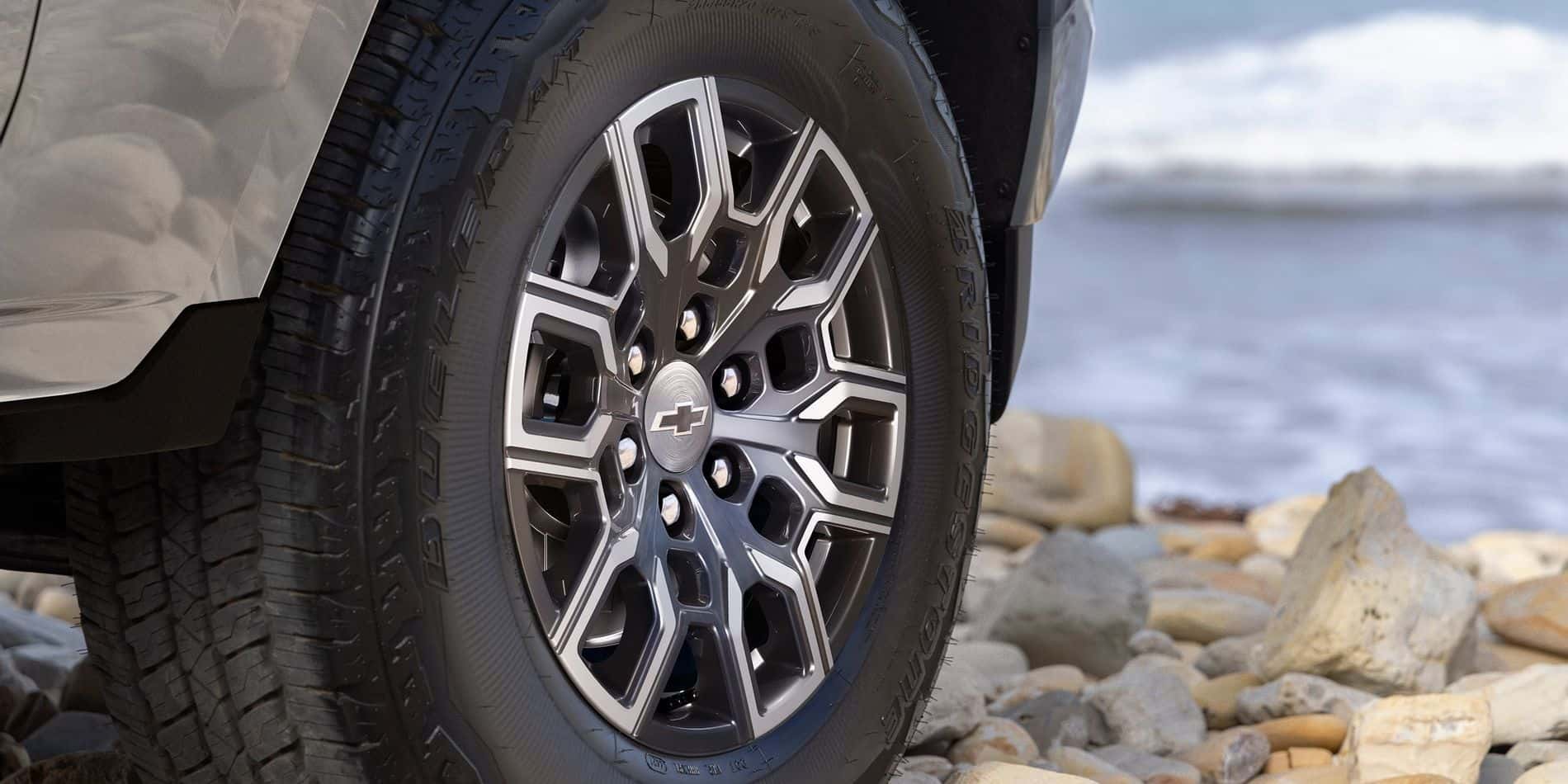
The Trailering Package is required for the higher non-ZR2 rating. Chevrolet’s model page identifies Advanced Trailering equipment for maximum towing, and the configurator distinguishes its availability by model. A factory-equipped trailer setup includes more than an engine badge.
Advanced Trailering is available on WT, Custom and LT, and standard on Trail Boss and Z71 in Chevrolet’s configurator. ZR2 uses its own factory trailering equipment and separate rating. A factory hitch connection, electrical connection and trailer-brake requirements are part of the complete towing setup.
A Marlton owner taking a trailer onto Route 70 has a loaded highway combination, rather than an unloaded truck with a receiver attached. The towing supplement sets the package, tongue-load and GCWR limits together. The Colorado overview places that trailer role alongside the five-seat cabin and short box.
Colorado’s published ratings cover conventional trailer towing. Its short-box midsize format and the cited receiver-hitch ratings serve conventional boat, utility and recreational trailer setups. A fifth-wheel or gooseneck application requires a vehicle and hitch combination specifically rated for that use.
Lucas Chevrolet also sells Silverado pickups for buyers with a different truck requirement. Our Silverado HD inventory provides a separate place for that larger-truck discussion. A Colorado conventional rating is not carried over to a fifth-wheel or gooseneck hitch.
Available trailering technology includes camera views, hitch-related assistance and a trailering app. Chevrolet offers up to ten camera views across the Colorado lineup. The actual views and functions follow the model and package equipment.
Hitch Guidance provides a screen-based aid for lining up the connection, while available Hitch View focuses the camera view around the hitch. An integrated trailer brake controller serves a different job, adjusting supported electric trailer braking. The towing supplement explains the controller’s operation and the trailer-brake requirements.
Blind Zone Steering Assist with Trailering is listed on the trailering-equipped off-road models in the configurator. It is driver assistance, with system limitations, rather than a substitute for visibility and control. The Colorado feature grid keeps standard cabin equipment separate from available camera and driver-assistance options.
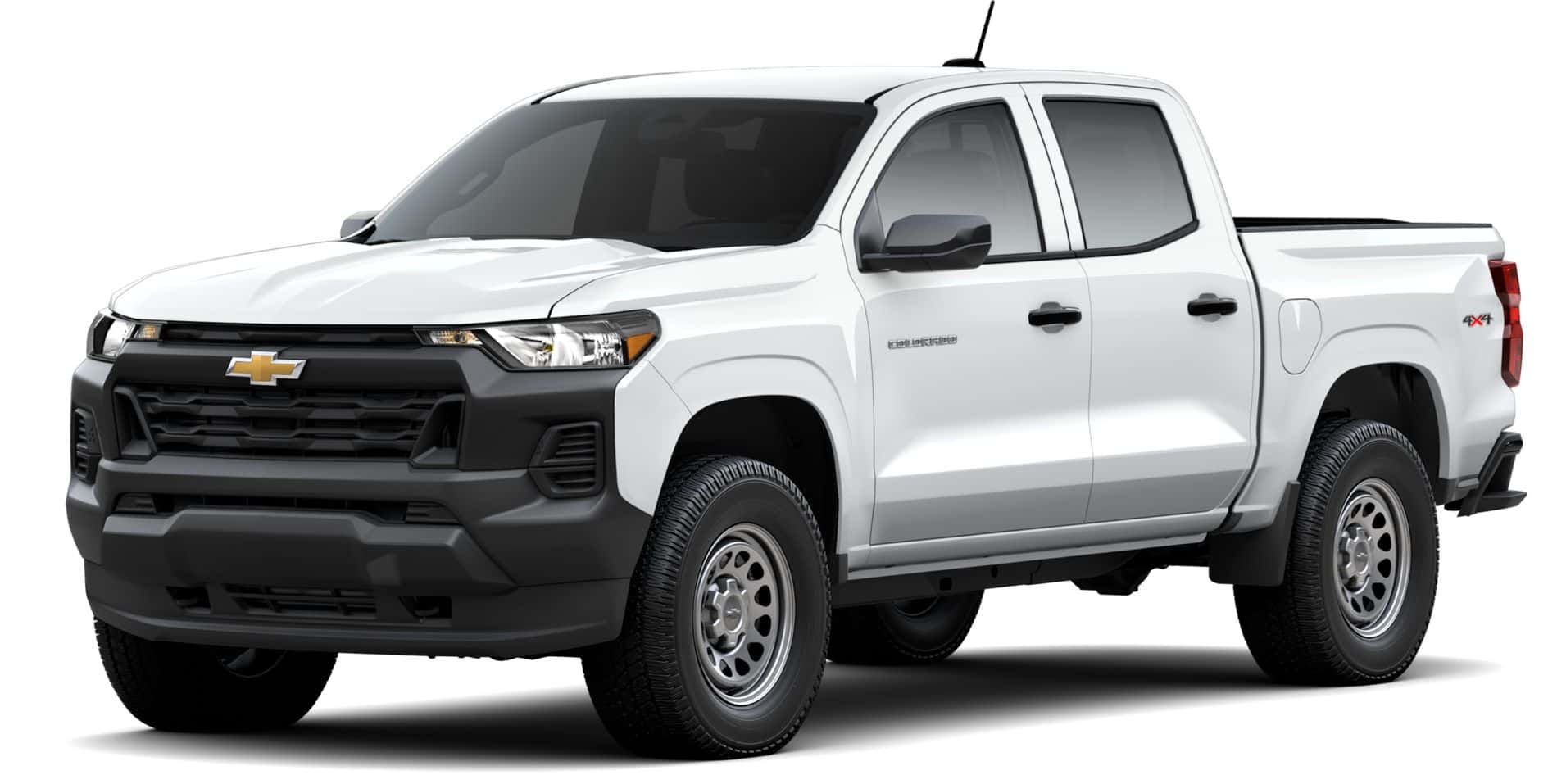
A loaded trailer’s weight is compared with its own rated truck setup, while tongue weight is also compared with the truck and hitch limits. GM specifies a 10–15% tongue-weight range for the loaded conventional trailer, subject to the stated maximum for the vehicle.
| Example loaded trailer | Tongue load at 10%, calculated | Tongue load at 15%, calculated | Rating consideration |
|---|---|---|---|
| 3,000-pound utility load | 300 pounds | 450 pounds | The lower 350-pound tongue limit can be exceeded even below a trailer-weight limit |
| 5,000-pound boat-and-trailer example | 500 pounds | 750 pounds | Truck payload and the particular setup’s tongue limit remain separate checks |
| 6,000-pound recreational-trailer example | 600 pounds | 900 pounds | The upper example exceeds the 770-pound package tongue maximum |
| 7,700-pound trailer example | 770 pounds | 1,155 pounds | The package’s tongue maximum is already reached at the 10% illustration |
The examples are arithmetic illustrations, not weights assigned to any particular boat, camper or trailer. They show why a trailer can fit the tow-weight number and still exceed a tongue or payload limit. Its actual loaded weight and tongue weight determine the combination’s weight relationship.
The receiver, trailer and hitch system must all carry the required ratings. A properly equipped Colorado Crew Cab with the Trailering Package combines its rated trailer equipment with the cabin and bed the owner uses throughout the week.
Route 70 carries Shore-bound weekend traffic, making low-speed traffic and longer highway travel part of the same trip. For Delran owners whose outdoor plans also include the Rancocas Creek area, the Colorado’s open bed carries gear outside the passenger cabin. The local route and the load each add a different part to truck use.
Turnersville drivers making frequent trailer trips fall within the owner’s manual’s severe-service description. Four-wheel-drive trucks on that schedule reach their transfer-case fluid service at 50,000 miles. The maintenance and service page includes the full normal-versus-severe distinction for ongoing towing use.
Westville buyers can arrange a Colorado test drive with Lucas Chevrolet at 1622 Route 38 in Lumberton. Our team offers financing and trade-in valuations as well. Call us at (609) 288-7663 for the truck and equipment you want to buy.
Without the Trailering Package, GM’s conventional trailer limit is 3,500 lbs for this properly equipped 2.7L Crew Cab. Correct hitch and electrical equipment, truck loading and the other vehicle limits still apply.
The package identifies the higher-rated conventional towing setup. When properly equipped, the non-ZR2 2.7L Crew Cab with the Trailering Package has a maximum 7,700-lb rating and 13,250-pound GCWR. The manual also assigns that setup a separate 770-pound maximum tongue load.
The Bison equipment combination is limited to a 5,500-lb trailer when properly equipped. Its GCWR is 11,600 pounds and maximum tongue load is 550 pounds. Those limits are separate from the regular ZR2’s 6,000-lb trailer rating and the packaged non-ZR2 setup.
Yes. Tongue weight presses on the truck and counts alongside passengers, cargo and accessories. A 600-pound tongue load plus 700 pounds of people and cargo uses 1,300 pounds in that illustration. The actual truck’s loading, axle, tire and hitch limits remain part of the combination.
GM describes 10–15% of the loaded trailer weight as the tongue-weight range, subject to the vehicle’s maximum tongue limit. For a 5,000-pound trailer, that arithmetic gives 500–750 pounds. The rated tongue limits differ between the package, ZR2, Bison and lower-rated equipment cases.
The 2027 towing supplement requires a weight-distributing hitch above 6,000 pounds of trailer weight. That requirement works alongside the truck’s trailer, tongue-load, payload and combined-weight limits. The towing equipment must be rated for the complete loaded combination rather than selected from the trailer-weight number alone.
The 13,250-pound GCWR applies to the properly equipped 2.7L Colorado Crew Cab with the Trailering Package, excluding ZR2 and Bison. It covers the loaded truck and trailer together, including people, cargo and equipment. The trailer’s individual rating and the truck’s payload remain separate limits.
Compare the trailer’s fully loaded weight, including water and cargo, with the truck’s limit. Water and cargo carried for the trip increase a trailer’s departure weight. Cargo placed behind the pickup’s seats also counts in the loaded tow vehicle, so weigh the complete combination in its travel condition.
Explore the Colorado
Next Step
Shop a Colorado with the trailering equipment for your loaded combination.

