Lucas Chevrolet · South Jersey
Measurements that make the truck choice concrete
Compare exact configurations, then measure the places where your truck will work.
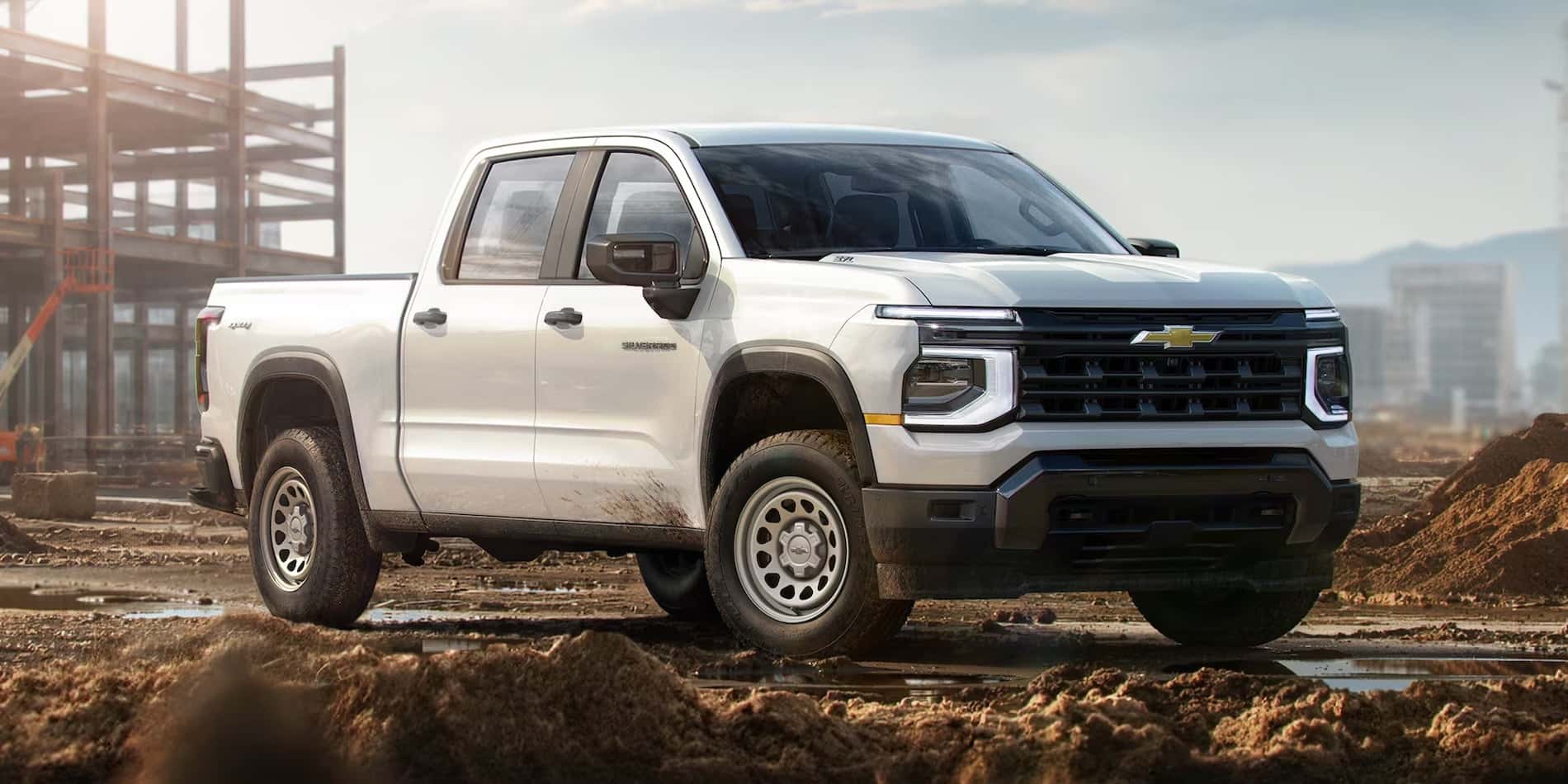
The 2027 Chevrolet Silverado 1500 offers four engines, all paired with a 10-speed automatic: TurboMax, Duramax diesel, a 5.7-liter V8 and a 6.6-liter V8. Dimensions, vehicle weight and load ratings depend on the complete configuration. For South Jersey shoppers checking a driveway, garage or trailer match, the cab, bed and drivetrain belong beside every figure. See the vehicle overview or choose trim equipment after checking the measurements below.
Quick Answer
| Engine | Horsepower | Torque | Transmission |
|---|---|---|---|
| 2.7L TurboMax turbocharged four-cylinder | 350 hp at 5,200 rpm | 455 lb-ft at 3,000 rpm | 10-speed automatic |
| 3.0L Duramax turbo-diesel inline-six | 305 hp at 3,750 rpm | 495 lb-ft at 2,750 rpm | 10-speed automatic |
| 5.7L V8 gasoline | 402 hp at 5,500 rpm | 428 lb-ft at 4,300 rpm | 10-speed automatic |
| 6.6L V8 gasoline | 481 hp at 5,800 rpm | 501 lb-ft at 4,000 rpm | 10-speed automatic |
The 2.7-liter TurboMax combines 350 hp with 455 lb-ft of torque. Its peak torque occurs at 3,000 rpm, a different operating point from the V8 engines. For everyday driving, evaluate how the truck responds when pulling away, entering traffic and maintaining speed with the transmission in its normal mode. An engine’s displacement alone does not describe how it feels through those maneuvers.
The 3.0-liter Duramax produces 495 lb-ft at 2,750 rpm. Its diesel fuel system and maintenance requirements belong in the ownership decision alongside its driving character. A Crew Cab buyer should pair that engine choice with the required bed, drivetrain and trailering equipment. Engine torque is one part of capability; the applicable trailer rating comes from the complete truck.
The 5.7-liter V8 delivers 402 hp and 428 lb-ft. A properly equipped Crew Cab 4WD with this engine and Max Trailering Package has a conventional trailer rating of 13,500 lbs. The Double Cab Standard Bed 2WD configuration with that package reaches the lineup’s 13,700-lb conventional maximum. Cab choice, drivetrain and equipment explain why a single V8 specification cannot serve as every truck’s towing rating.
With 481 hp and 501 lb-ft, the 6.6-liter V8 has the highest horsepower of these four engines. Its Crew Cab 4WD conventional trailer rating is 9,700 lbs with the Short Bed or Standard Bed configuration. Horsepower and trailer ratings answer different questions. The truck’s cooling, chassis, weight and configuration determine capability alongside engine output.
These matched examples show how two Silverado configurations occupy space. The WT figures describe a TurboMax Regular Cab Standard Bed 2WD; the ZR2 figures describe a Duramax Crew Cab Short Bed 4WD. They are useful reference points for two distinct truck layouts, rather than universal measurements for their trim names.
| Measurement | WT Regular Cab Standard Bed 2WD | ZR2 diesel Crew Cab Short Bed 4WD |
|---|---|---|
| Overall length | 212.1 inches | 233.6 inches |
| Overall height | 75.6 inches | 79.4 inches |
| Wheelbase | 126.5 inches | 147.8 inches |
| Ground clearance | 7.3 inches | 12.4 inches |
| Bed length | 79.7 inches | 70.2 inches |
| Curb weight | 4,560 pounds | 6,140 pounds |
| GVWR | 6,900 pounds | 7,500 pounds |
Silverado 1500 overall width is 81.2 inches including mirrors. Measure the mirrors fitted to the actual truck before deciding garage clearance, particularly when evaluating a truck with different mirror equipment. Allow room for an open door, a person getting out and any objects stored along the wall. A fit that clears the opening can still be inconvenient once parked.
| Additional weight example | Curb weight | Configuration scope |
|---|---|---|
| 5.7L V8 | 5,070 pounds | Double Cab 2WD |
| 6.6L V8 ZR2 | 5,990 pounds | Crew Cab Short Bed 4WD |
Curb weight describes the vehicle before your occupants and cargo; GVWR is the maximum permitted loaded vehicle weight. Options and added equipment affect the usable load allowance. The tire and loading label on the truck is the practical reference when counting people, tools, hitch equipment and trailer tongue load. A curb-weight example from another configuration should not be used to calculate your truck’s payload.
| Cabin measurement | WT Regular Cab example | ZR2 Crew Cab example |
|---|---|---|
| Front headroom | 42.7 inches | 43.1 inches |
| Front legroom | 44.4 inches | 44.4 inches |
| Front shoulder room | 64.5 inches | 64.5 inches |
| Front hip room | 62.4 inches | 62.4 inches |
| Rear headroom | Single seating row | 40.3 inches |
| Rear legroom | Single seating row | 42.8 inches |
| Rear shoulder room | Single seating row | 64.2 inches |
| Rear hip room | Single seating row | 60.3 inches |
| Seating capacity | 3 | 5 |
Passenger space is most useful when checked with the front seat adjusted for the actual driver. A rear-seat passenger’s knee position changes with that setting. If you are bringing a child restraint, check its installation instructions and the truck manual, then assess front-passenger space with the restraint correctly installed. Shoulder and hip measurements are separate from the number of seating positions.
For Moorestown households carrying adults, a rear-seat demonstration can settle questions that an exterior photograph cannot. Cherry Hill shoppers transporting work bags and personal items can also check where those objects will sit without occupying passenger space. Measure bulky equipment before the visit so cabin storage and bed storage can be considered together.
| Engine and configuration | Conventional trailer rating, properly equipped | Relevant equipment |
|---|---|---|
| 5.7L V8 Crew Cab 4WD | 13,500 lbs | Max Trailering Package |
| 5.7L V8 Double Cab Standard Bed 2WD | 13,700 lbs | Max Trailering Package |
| 3.0L Duramax Crew Cab Short Bed 4WD | 12,000 lbs | Max Trailering Package |
| 2.7L TurboMax Crew Cab 4WD | 8,900 lbs | Applicable trailering equipment |
| 6.6L V8 Crew Cab Short or Standard Bed 4WD | 9,700 lbs | Applicable trailering equipment |
| Base payload example | Published payload |
|---|---|
| 2.7L TurboMax Crew Cab 4WD | 2,040 pounds |
| 5.7L V8 Crew Cab 4WD | 1,940 pounds |
| 3.0L Duramax Crew Cab 4WD | 1,810 pounds |
| 6.6L V8 ZR2 Crew Cab Short Bed 4WD | 1,510 pounds |
| 2.7L TurboMax Regular Cab Standard Bed 2WD | 2,340 pounds |
Published base payload examples help explain configuration differences. The equipped vehicle’s label governs the truck you buy. Conventional trailer tongue load occupies part of that allowance together with passengers and items in the bed. Use the towing and payload guide to prepare the complete loaded-trailer calculation before choosing equipment.
Bed length is one part of a cargo fit. Check the width between the wheel housings, tie-down access, tailgate operation and how your load will be secured. A bed cover, toolbox or rack can change the usable space and add weight. For Delran buyers carrying work equipment, sketch the layout with those accessories included rather than measuring the empty bed alone.
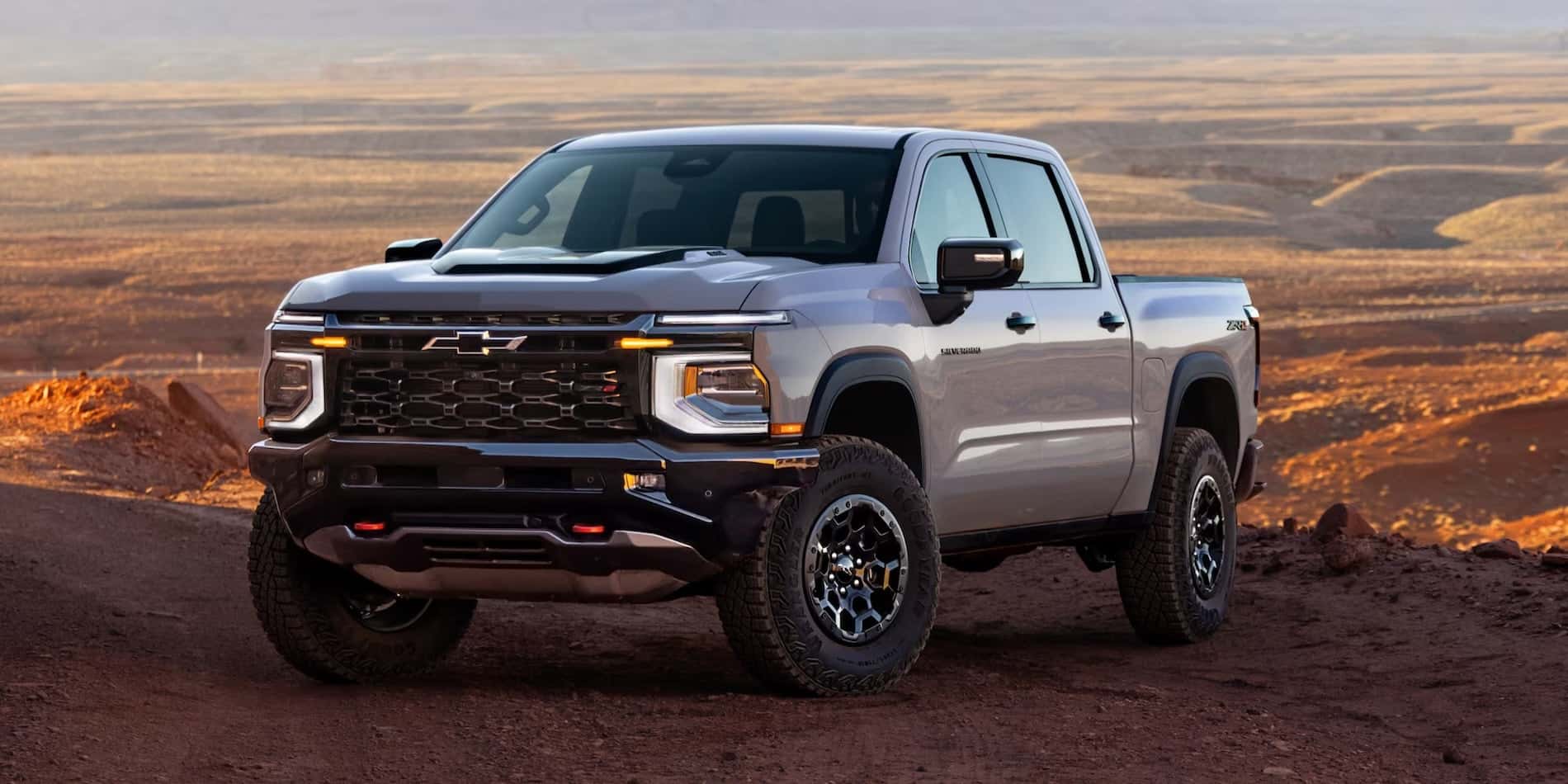
| Trim or component | Specification | Practical consideration |
|---|---|---|
| Custom | 20-inch wheels | Check the fitted tire specification |
| Custom Trail Boss and Trail Boss | 18-inch wheels; 34-inch mud-terrain tires; 2-inch lift | Evaluate entry height and tire character |
| High Country | 22-inch wheels | Assess ride on representative pavement |
| ZR2 | 18-inch wheels; 35-inch mud-terrain tires; 2-inch lift | Check terrain requirements and parking height |
| Front brake rotor | 13.5-inch diameter | Service by the fitted brake equipment |
| Rear brake rotor | 13.6-inch diameter | Follow the inspection schedule |
| Steering | Electric power-assisted rack and pinion | Try low-speed maneuvering and steering adjustment |
Wheel diameter and overall tire diameter are different measurements. An 18-inch wheel with a tall tire can produce a different ride height and driving feel from a 22-inch wheel with another tire profile. Inspect the tire placard and sidewalls on the selected truck. Replacement tires should match the vehicle’s requirements, including load capability, rather than merely matching an appearance.
Fuel use depends on engine, drivetrain, tires, payload, trailer drag and the trip itself. Plan refueling around the loaded use you expect. A truck doing short stop-and-go trips and a truck running steady highway miles can have different fuel needs even with the same engine. Towing a tall enclosed trailer adds another variable, so leave a practical refueling margin.
| Powertrain or cab | Fuel or tank information |
|---|---|
| TurboMax and 5.7L V8 | 87-octane or higher gasoline |
| 6.6L V8 | 91-octane or higher gasoline recommended; 87 permitted with reduced performance |
| Duramax | Diesel fuel meeting the owner manual requirements |
| Regular Cab | Available approximately 28-gallon tank |
| Double Cab and Crew Cab | Available approximately 34-gallon tank |
The tank figures describe available equipment, not a guarantee that every truck in that cab style has that tank. Confirm capacity on the vehicle being considered. Fuel octane and engine-oil specifications are also different requirements: buying the recommended fuel does not identify the correct oil. The service guide separates gasoline-engine and diesel maintenance needs.
| Trim | Confirmed equipment highlights |
|---|---|
| WT | 16.3-inch center touchscreen; 12.2-inch driver display |
| Custom | Power driver seat; EZ Lift tailgate; 120-volt outlets |
| Silverado | Heated front seats; heated wheel; keyless entry |
| Custom Trail Boss | Two-speed transfer case; skid plates; recovery hooks |
| Trail Boss | Multi-Flex center console; eight-speaker Bose audio |
| High Country | 11.5-inch passenger display; Adaptive Ride Control; panoramic roof |
| ZR2 | DSSV dampers; front and rear locking differentials; Multi-Flex Tailgate |
All Silverado 1500 trims include Google built-in with Gemini, Maps and Play, plus Apple CarPlay and Android Auto compatibility. Functions that depend on data, an account or a compatible phone should be demonstrated with the required connection. Equipment such as heated seating, specialized suspension and passenger displays has trim-specific scope; the trim guide explains those choices in detail.
Safety technology supports an attentive driver. Verify the fitted systems, understand their alerts and keep sensors and camera views clear according to the manual. Camera images and assistance functions can help with awareness, but the driver remains responsible for observing traffic, pedestrians, trailer movement and the space around the truck.
Super Cruise is standard on High Country and ZR2 with a three-year plan, and available on Silverado and Trail Boss. It operates on compatible roads under its conditions and requires driver attention. For Hainesport trips that include I-295, check actual compatible-road coverage and the selected truck’s equipment. A familiar road name does not by itself establish that every segment supports the system.
| Coverage area | Coverage or terms |
|---|---|
| Bumper-to-bumper limited warranty | 3 years or 36,000 miles, whichever comes first |
| Powertrain limited warranty | Engine-specific terms and eligibility apply; review the vehicle’s warranty booklet |
| Rust-through limited warranty | 6 years or 100,000 miles, whichever comes first |
| Roadside assistance and courtesy transportation | Program eligibility and applicable vehicle terms apply |
Warranty coverage concerns eligible repairs under the written terms. Routine maintenance, wear items and damage have their own treatment, so keep service records and review the booklet for the truck’s engine. The maintenance schedule and ownership guide connects those records to the services the vehicle requires.
| Your question | Measurement to use | What to do at the visit |
|---|---|---|
| Will it fit in my garage? | Exact overall length, mirror width and height | Measure the opening and usable interior space |
| Will passengers fit comfortably? | Cab layout and head, leg, shoulder and hip room | Adjust the front seat, then check the rear |
| Will it carry my tools and trailer? | Truck label, hitch rating and loaded trailer weights | Count all people, equipment and tongue load |
| Will the bed suit my cargo? | Usable bed dimensions and accessory footprint | Check tie-downs and loading access |
| Will trail equipment suit my routine? | Tire diameter, clearance and cab entry height | Try entry and assess the intended terrain |
Marlton drivers can bring parking-space measurements and the height of any overhead storage. A Route 38 visit is more productive when the numbers describe your actual space and the exact truck parked in it. Lucas Chevrolet can help identify the selected vehicle’s equipment at 1622 Route 38, Lumberton, NJ 08048. Find a Silverado 1500 or request a specifications demonstration.
Each dimension table names its configuration. A Regular Cab and a Crew Cab can have different lengths, wheelbases, heights and beds. Use the matching example for initial planning, then measure the selected truck with its fitted mirrors, tires and accessories before deciding a close parking fit.
Curb weight describes the vehicle before your occupants and cargo. GVWR is the maximum permitted loaded vehicle weight. The vehicle labels establish the limits for the equipped truck. Do not combine a curb weight from one configuration with the GVWR of another to calculate a usable cargo allowance.
Legroom is one measurement, and the WT and ZR2 examples both list 44.4 inches in front. Seating shape, adjustment, console layout, headroom and rear-seat space also influence comfort. Sit in the actual cabin with the seat set for your driving position.
Measure the truck’s parking position and the clear space behind it with the tailgate open. Account for anything attached to the hitch and for the room you need while loading. An overall vehicle-length figure alone does not describe the working space required behind the bed.
Wheel size describes the wheel; the overall tire diameter includes the tire around it. ZR2 uses 18-inch wheels and 35-inch mud-terrain tires. Both measurements matter when considering replacement fit, ride height and how the truck enters a garage.
Tank capacity alone does not establish range. Engine, drivetrain, speed, cargo, trailer drag and conditions affect fuel use. Confirm the selected truck’s tank equipment and plan a refueling margin for its actual use, especially when towing or traveling through unfamiliar areas.
A trailer rating reflects the complete vehicle, including configuration, cooling, chassis and weight limits. Engine horsepower is one input. Use the exact engine, cab, bed, drivetrain and required package when matching a truck to a loaded trailer.
Bring your garage opening and usable parking dimensions, any overhead-clearance limits, cargo measurements and relevant trailer information. Include fitted accessories in the plan. Those details let the team check the selected truck against the places and tasks where you will use it.
Explore the Chevrolet Silverado 1500
Next Step
Take your garage and cargo measurements to the selected truck so its fitted mirrors, cab layout and loading space can be checked in person.
